- Lobby sweep
- Temp log
- Filter fryer oil
- Restock sauce station
- Prep loaded fries for dinner
- 1Marisol R.46%
- 2DeShawn T.41%
- 3Priya K.37%
- 4Luis A.32%
- 5Jordan M.28%
- Combo attached at the POS
- Drink upsized
- Loaded fries added
- Scored live from the POS
Team goal met. Every crew member on shift earns 50 pts at close. Top three earn more.
- 1Marisol R.46%
- 2DeShawn T.41%
- 3Priya K.37%
- 4Luis A.32%
- 5Jordan M.28%
- 6Tasha W.25%
- Just nowMarisol R. · combo attached+10 pts
- Moments agoDeShawn T. · drink upsized+5 pts
- EarlierPriya K. · combo attached+10 pts
- 1Round Rock2:12
- 2Cedar Park2:26
- 3Youup from 5th2:31
- 4Pflugerville2:58
- 5South Lamar3:10
- 6Kyle3:19
- 7Buda3:24
- 8Georgetown3:31
- 9Leander3:40
- 10Manor3:52
to the weekly goal. Hit it by Sunday: +200 pts for every crew member.
- Finished 5th of 14 · 2:44
- Order accuracy 97.1%, best in district
- 1Marisol R.860
- 2Priya K.740
- 3DeShawn T.610
- 4Luis A.450
Score the shift.
Reward the crew.
Fewer people quit. More combos ring. Displai puts a screen in your back of house, reads the POS and turns the shift into a game the crew can win. Nothing changes at the POS.
Nothing costs more than replacing crew.
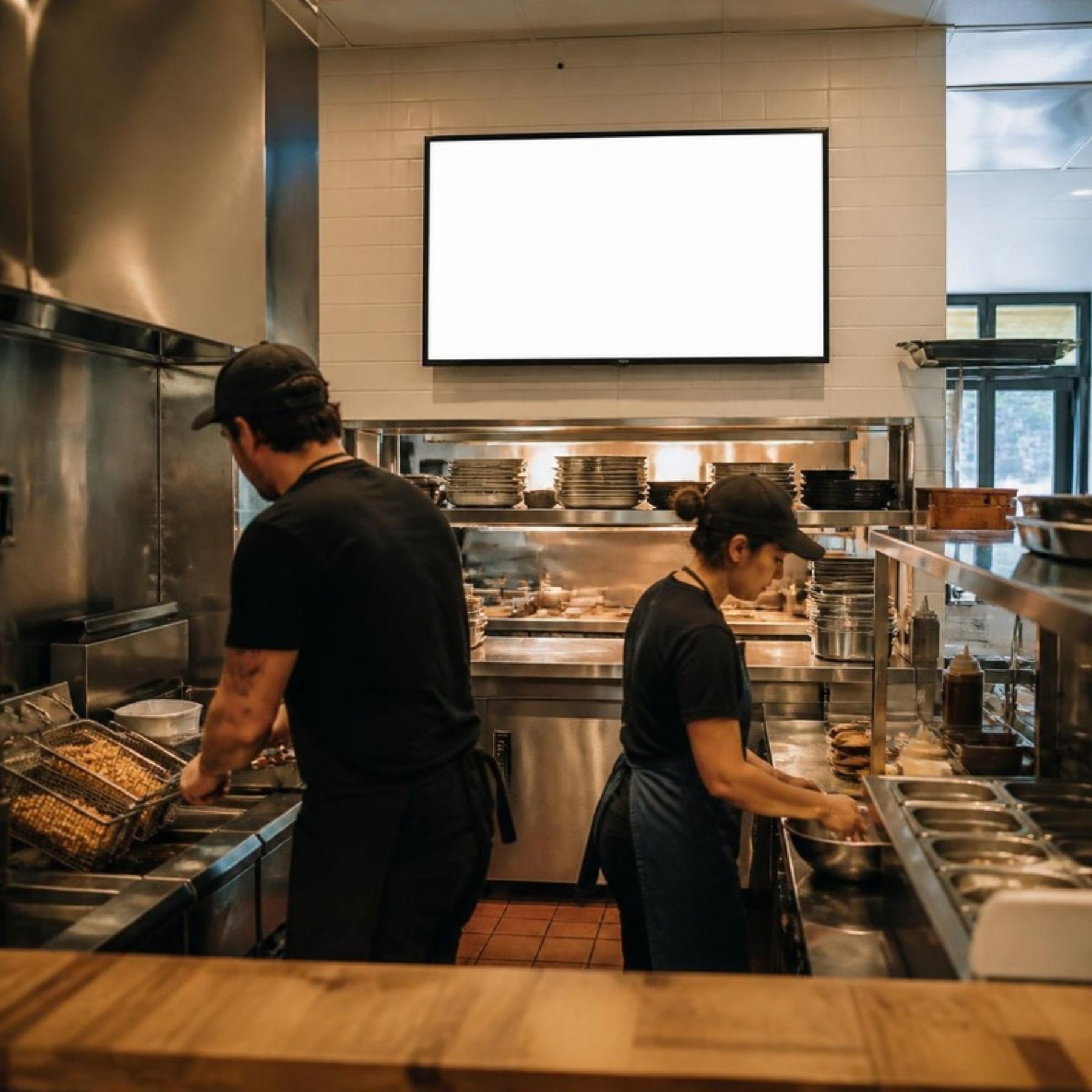
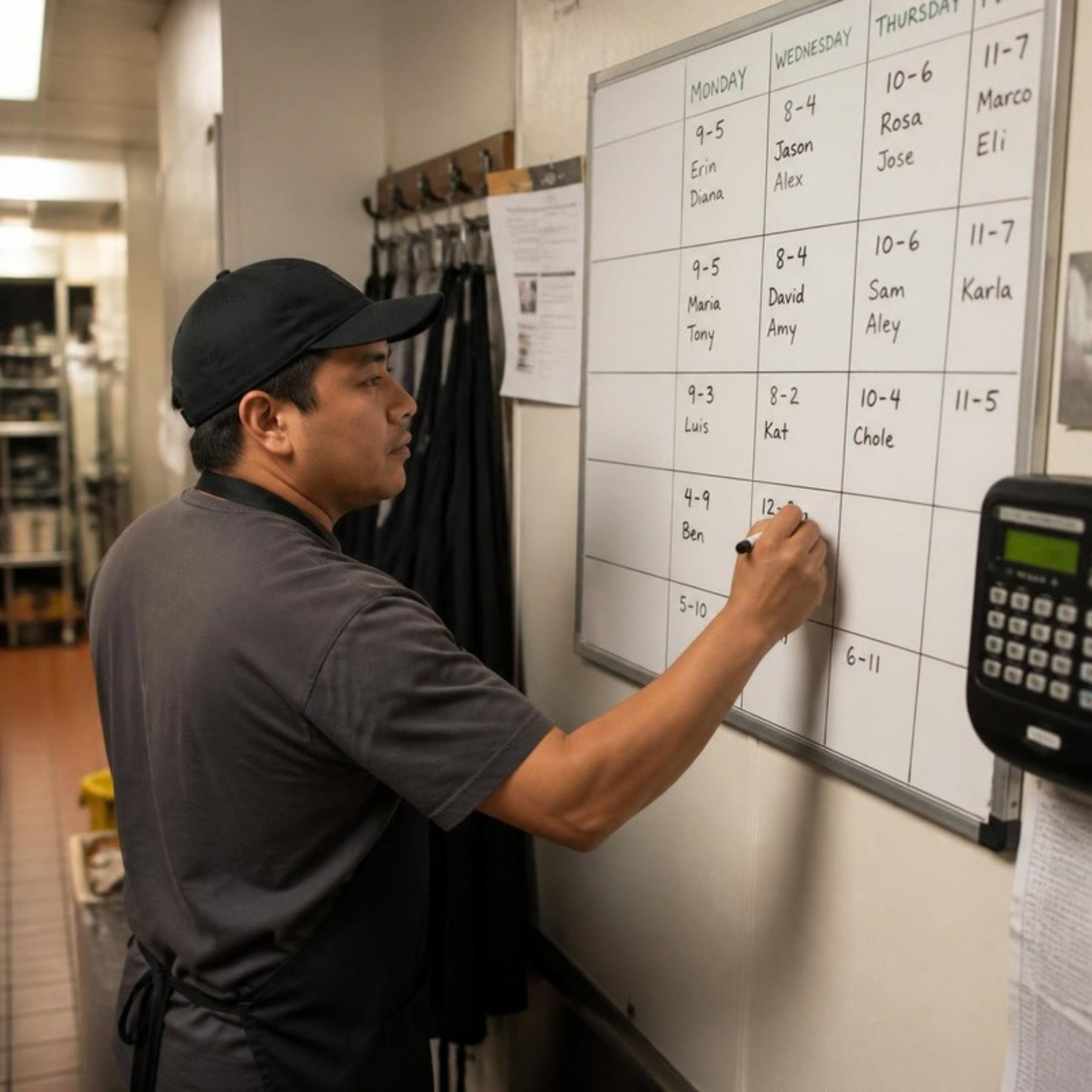
Whiteboards don't keep score. Managers don't have time to. So the people who make the numbers never see them.
Every restaurant replaces its whole crew, and then some, every year. Black Box Intelligence[1]
Nothing on this wall keeps score.
- Who is winning the shift
- Nobody knows
- Where the store ranks in the district
- Nobody knows
- What the crew earned today
- Nothing
- What the regional manager can see
- A photo, if someone sends one
offer incentives and rewards.Displai, 2023 State of Frontline Work, 500 US retail frontline workers[7]
One KPI. One shift. Scored live.
Combo attach today. Displai ranks the crew as the orders ring. The store goal pays everyone; the top three earn more. The manager picked it from a template in a browser this morning, between the delivery and the lunch rush.
Then the store plays the district.
The same scoring rolls up. The store sits third of fourteen on drive-thru time this week, up from fifth, and a weekly goal pays every crew member when the store hits it. Store-versus-store is the part franchisees ask for first.
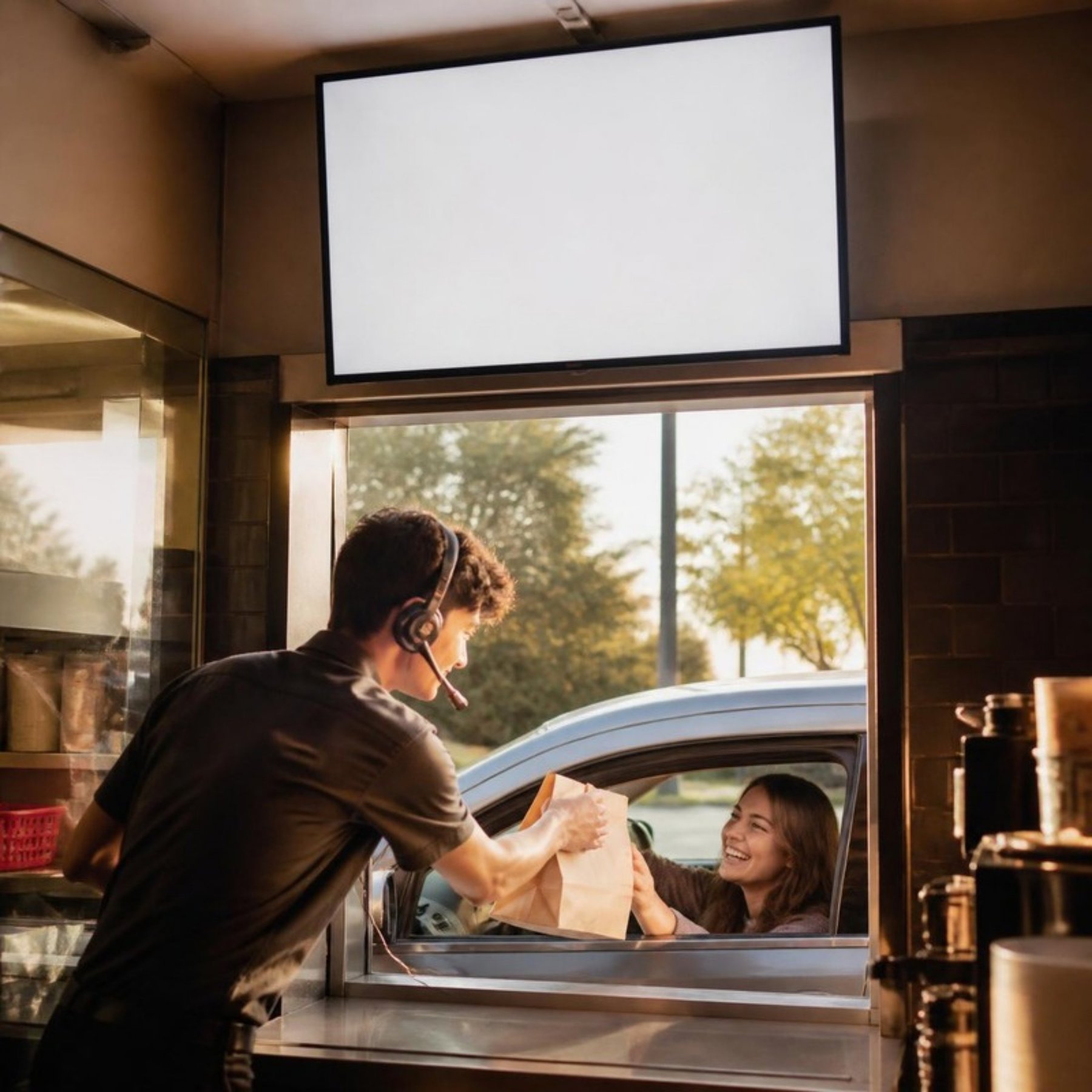
The contest is above the window.
2:41 on the lane. The crew can see where the shift stands without anyone telling them. Drive-thru time counts toward the store goal, so speed pays everyone.
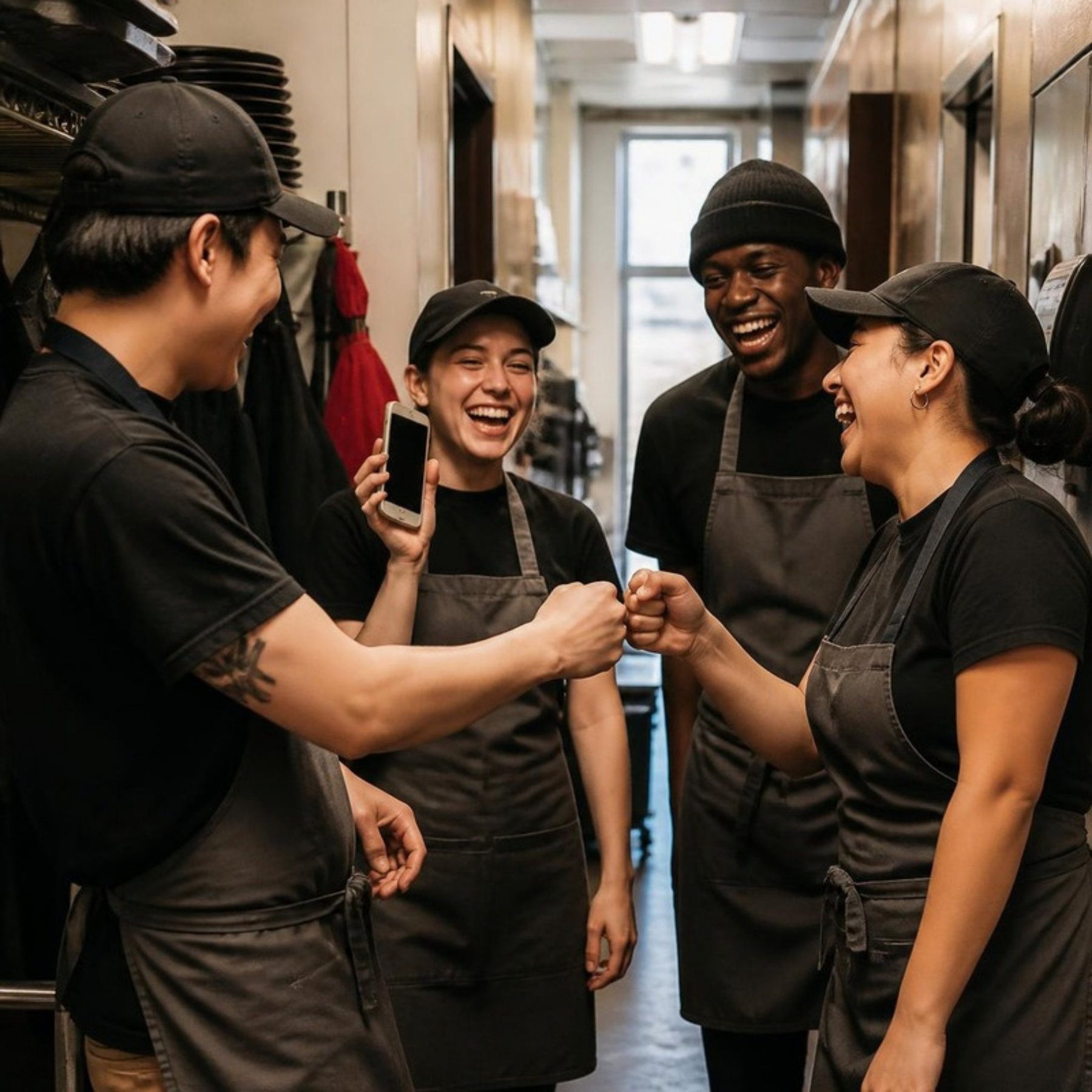
Points become reasons to stay.
Marisol is 640 points from the headphones. That is three more weeks of showing up and selling combos. Milestones post themselves: Priya hits 90 days Friday and the screen will say so before the manager remembers.
What it does to the P&L.
Three outcomes a strategy team can take to a budget meeting. Third-party research, not Displai claims.
- RevenueReward programs lift performance, and keep lifting.
- CostRecognition keeps people on the schedule.
- OperationsEngaged crews show up and get it right.
lower absenteeism in top-quartile engagement teams, with 32% fewer quality defects. The screen keeps score on speed and accuracy too. Gallup Q12 meta-analysis, 183,806 business units[4]
Key findings
A crew that stays past its first year and sells the combo without being asked: that is what quick-service operators are buying when they buy POS gamification. It reads the orders the restaurant's point-of-sale system already records and turns them into live contests, standings and points for the crew, and Displai shows that score on a screen it puts in the back of house, with no app and nothing changed at the POS. The two lines it is built to move are hourly turnover and attach rate, and those are the two lines this report follows on the quick-service P&L.
- 130% Annual hourly turnover in quick-service restaurants was 130% in 2025, according to Black Box Intelligence.[1]
- $5,864 Replacing one hourly restaurant employee costs $2,706 in hard costs, according to Black Box Intelligence, and $5,864 fully loaded, according to the Cornell Center for Hospitality Research.[2][3]
- $122K At 130% turnover, a 16-person crew turns over 20.8 seats a year, about $122K in fully loaded replacement cost per restaurant, a Displai calculation from the Black Box Intelligence and Cornell figures.[9][1][3]
- 89% Of the 500 US retail frontline workers in Displai's 2023 State of Frontline Work survey, 89% said they were likely to quit within 12 months, and their top request outside pay was "offer incentives and rewards".[7]
- 23% Business units in the top quartile of employee engagement post 18% higher sales productivity and 23% higher profitability than the bottom quartile, according to the Gallup Q12 Meta-Analysis of 183,806 business units.[4]
- 45% Employees who received high-quality recognition were 45% less likely to have left two years later, according to the Workhuman and Gallup study of 3,400 employees.[5]
- 38% Tangible rewards such as gift cards and merchandise produce about 38% greater performance improvement than cash-equivalent rewards, according to the Incentive Research Foundation.[6]
- 2.7% One week of a crew suggestive-selling contest lifted the average check by 2.7%, or $0.82, according to The Rail, and gamified suggestive-selling programs report 3 to 5% top-line lift.[8]
What is that worth across your system?
Four inputs. Thirty seconds. Your number.
Run your numbers





One feed. One screen. Four ways to win.
Your POS already records every order, add-on and drive-thru second. Displai turns that into contests, standings and points on the screen it puts in your back of house.
Your POS
Every order, add-on, drive-thru second and clock-in, as it happens. Toast and Square live, others through the Displai catalog.
Scores the shift
- 1Shift, day and week contests
- 2Store vs. store standings
- 3Points, milestones, shout-outs
Every number on the screen traces back to a POS line item. Nothing is typed in by a manager, so nothing goes stale.
The screen Displai puts in your back of house. No app, no login.

Shift contests
Combo attach, LTOs, drink upsize. Live standings for the crew on shift.

Store vs. store
District standings on speed, accuracy and attach. Team goals pay everyone.

Recognition
Shout-outs, 90-day milestones and birthdays post themselves. No manager needed.
Rewards store
Points become gift cards and merchandise, or a bigger prize worth staying for.
No app. Nobody has ever downloaded a kitchen app on purpose. Crew apps fail for ordinary reasons: phones are off the line, turnover means constant re-onboarding, adoption dies the week after launch. A screen has 100% adoption on day one and the same adoption on day 300.
A points balance is a reason to stay.
Contests pay in points, not cash. Crew members redeem for gift cards and merchandise, or save toward a bigger prize. Budget per employee is set by the operator, and points only exist when a KPI moved.
Tangible rewards outperform cash by about 38%. A balance three weeks from the headphones is a reason to work the next three weeks. A cash spiff is spent and forgotten. Incentive Research Foundation[6]
Redeem in the storeYour numbers.
Four inputs. Pick a segment, set how many restaurants, then choose a modest sales lift and a modest cut in turnover. Everything else uses industry averages you can adjust.
Adjust industry averages
Replacements = restaurants × crew × turnover; avoided = replacements × your reduction; savings = avoided × cost per replacement; revenue = restaurants × AUV × lift. Displai subscription and screen cost are not netted out. Segment AUVs are starting points, not benchmarks[9].
Questions operators ask
Straight answers for a budget meeting. The research answers carry their sources; the product answers describe Displai as it ships.
What is POS gamification?
POS gamification turns the sales data a restaurant's point-of-sale system already records, such as orders, add-ons, combo attach and drive-thru times, into live contests, standings and points for the crew. The crew sees the score as orders ring, the store works toward a team goal, and points redeem for rewards. Displai does this on a screen it puts in the back of house, with no app and nothing changed at the POS.
How much does it cost to replace a restaurant employee?
Replacing one hourly restaurant employee cost $2,706 in hard costs (recruiting, hiring and training) in 2025, according to Black Box Intelligence, and $5,864 fully loaded, according to the Cornell Center for Hospitality Research. Replacing a non-GM manager costs $11,940 and a general manager $17,651 (Black Box Intelligence).
Black Box Intelligence[2]; Cornell Center for Hospitality Research[3]What is hourly turnover in quick service in 2025?
Annual hourly turnover in quick-service restaurants was 130% in 2025, according to Black Box Intelligence, cited by DailyPay. Limited-service hourly turnover was 110% on a rolling twelve-month basis in Q3 2025 (Black Box Intelligence). At 130%, a 16-person crew turns over 20.8 seats a year (Displai calculation).
Black Box Intelligence, cited by DailyPay[1]; Displai calculation[9]Do rewards work better than cash for restaurant crews?
On the research, yes. Tangible and experiential rewards such as gift cards and merchandise produce about 38% greater performance improvement than cash-equivalent rewards, according to the Incentive Research Foundation. Reward programs average a 22% performance gain, rising to 44% for individuals and 48% for teams after six months (Incentive Research Foundation). Displai pays contests in points that redeem for gift cards and merchandise, with the budget per employee set by the operator.
Incentive Research Foundation[6]Does employee engagement affect restaurant sales?
On Gallup's data, yes. Across industries, business units in the top quartile of employee engagement post 18% higher sales productivity and 23% higher profitability than the bottom quartile, along with 78% lower absenteeism, 32% fewer quality defects and 21% lower turnover in high-turnover organizations (Gallup Q12 Meta-Analysis 2024, 183,806 business units). One week of a crew suggestive-selling contest lifted the average check by 2.7%, or $0.82 (The Rail).
Gallup Q12 Meta-Analysis[4]; The Rail[8]How does Displai work?
Displai puts a screen in the restaurant's back of house and connects to the POS. Every order, add-on, drive-thru second and clock-in flows in as it happens. Displai scores it into shift, day and week contests, store-versus-store standings, points, milestones and shout-outs, and shows them on the screen. A manager picks a contest from a template in a browser; nothing is typed in by hand, so nothing goes stale.
Does the crew need an app?
No. Displai runs on the screen it puts in the back of house. Crew members do not download anything or log in. Every crew member on shift sees it, on day one and on day 300, and nothing changes at the POS.
Which POS systems does Displai work with?
Toast and Square connect live. Other POS, kitchen, labor and inventory systems connect through the Displai catalog.
How long is a Displai demo?
Thirty minutes with the team that builds Displai. Bring your POS and your worst turnover number, and book at displai.ai.
Your shift starts with a score.
Thirty minutes with the team that builds it. Bring your POS and your worst turnover number.
Terms used in this report
POS gamification
Using the point-of-sale feed to score crew performance as a game: a contest on one KPI such as combo attach or drive-thru time, live standings, a team goal that pays everyone, and points that redeem for rewards. The score updates as orders ring, so nobody types it in.
Hourly turnover
Hourly separations in a year divided by average hourly headcount. 130% means a restaurant replaces its whole crew, and then some, in a year. That was the 2025 quick-service rate, according to Black Box Intelligence.[1]
Cost to replace an hourly employee
Hard costs are recruiting, hiring and training: $2,706 per hourly restaurant employee in 2025, according to Black Box Intelligence. Fully loaded, counting the costs beyond recruiting, hiring and training: $5,864, according to the Cornell Center for Hospitality Research.[2][3]
Employee engagement
Gallup's Q12 measure of how involved in and enthusiastic about their work employees are. In the Gallup Q12 Meta-Analysis of 183,806 business units, top-quartile units beat bottom-quartile units on sales productivity, profitability, absenteeism, quality defects and turnover.[4]
Attach rate
The share of orders that include an add-on such as a combo, an upsized drink or a side. A shift contest on combo attach rate is scored live from the POS as each order rings.
Store-versus-store standings
A ranking of the restaurants in a district or region on one KPI for a week, such as drive-thru time or order accuracy, with a weekly goal that pays every crew member when the store hits it.
Tangible rewards
Non-cash rewards such as gift cards, merchandise and experiences. About 38% more effective than cash-equivalent rewards at improving performance, according to the Incentive Research Foundation.[6]
Back-of-house screen
A screen Displai puts in the kitchen or prep area, where every crew member looks on every shift. It carries shift tasks, 86'd items and limited-time offers, with the live score alongside. No app, no login, nothing changes at the POS.
Sources
- QSR annual hourly turnover of 130% (2025); limited service 110% on a rolling-12 basis. Black Box Intelligence, cited by DailyPay. dailypay.com
- Cost to replace one hourly restaurant employee: $2,706 in 2025 (hard costs); $11,940 for a non-GM manager; $17,651 for a general manager. Black Box Intelligence. blackboxintelligence.com
- Fully loaded cost of hourly turnover, $5,864 per employee. Cornell Center for Hospitality Research, cited by Homebase. joinhomebase.com The $6,000 to $10,000 range is an operator estimate.
- Top-quartile vs bottom-quartile engagement: 18% higher sales productivity, 23% higher profitability, 78% lower absenteeism, 32% fewer quality defects, 21% lower turnover in high-turnover organizations. Gallup Q12 Meta-Analysis (2024), 183,806 business units. gallup.com
- Employees who received high-quality recognition in 2022 were 45% less likely to have left by 2024. Workhuman and Gallup, 3,400 employees. workhuman.com
- Reward programs: 22% average performance gain; 44% (individual) and 48% (team) after six months; tangible and experiential rewards about 38% more effective than cash-equivalent. Incentive Research Foundation. theirf.org
- Displai, The State of Frontline Work Report (published under the Raydiant name; read the full report at go.displai.ai). Survey of 500 US retail frontline workers (Pollfish, February 2023): 59% not engaged (22% in 2021, 29% in 2022), 78% seeing more turnover than ever, 89% likely to quit within 12 months, "offer incentives and rewards" the top request outside pay, 80% lack the tools they need, 84% say head office does not understand their value.
- Measured crew competition: $0.82 (2.7%) per check in one week; gamified suggestive-selling programs reporting 3 to 5% top-line lift. The Rail. therail.media
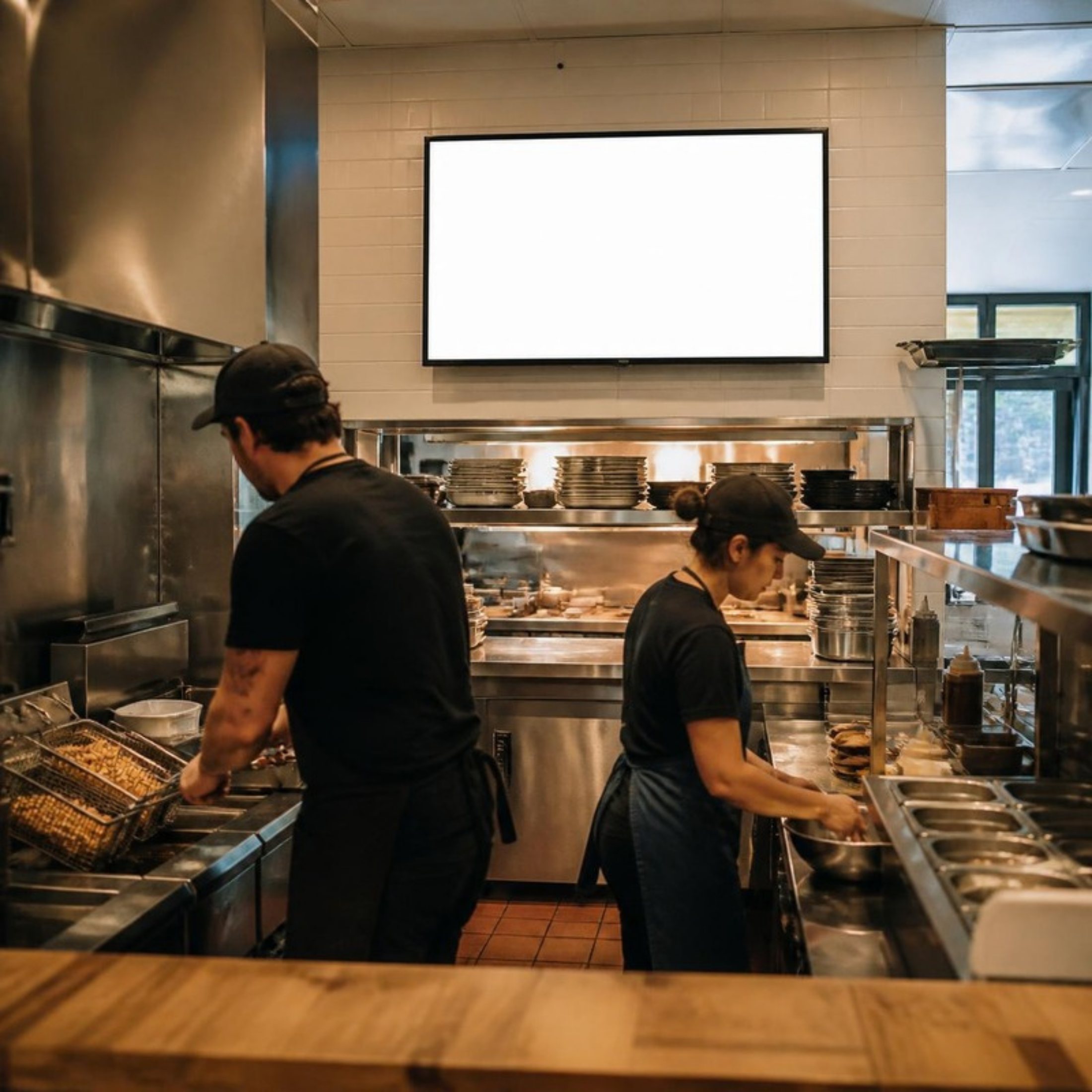
- Average unit volume presets in the model ($1.5M quick service, $2.2M fast casual, $0.9M coffee and snack) are starting points in the range of published chain averages, not benchmarks. The default of 16 hourly crew per restaurant is likewise a starting point, not a benchmark. The replacement-cost total on the problem beat is a Displai calculation: 16 crew at 130% turnover (source 1) is 20.8 replacements a year; at $5,864 fully loaded (source 3) that is $121,971, about $122K; at $2,706 in hard costs (source 2) it is $56,285, about $56K. Store, crew and menu details on the screens are illustrative. Photography is illustrative of a quick-service back of house, not a Displai customer location.